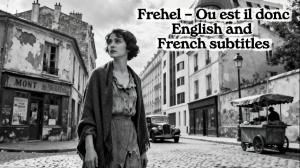
This is a 1926 musette from the French singer Fréhel.
Composed by Vincent Scotto and written by André Decaye and Lucien Carol
It tells the story of a woman who can’t recognise the area after a long exile.
Linking to Fréhel’s personal story (after a suicide attempt in 1913, she emigrated to Bucharest and lived in Turkey and Russia for 10 years)
The song highlights the bitter reality of the “American Dream” and the gentrification of Paris. The traditional working-class area of Paris (Montmartre) was losing its identity and sense of community to the profit of capitalist ventures and exploitation.
The illusion :
“Y en a qui vous parlent de l’Amérique, (There are some who talk about America)
Ils ont des visions de cinéma (Their vision is that of the movies).”
Ces boniments-là rendent moins timide, (Those sales pitches give them confidence)
l’on y part, un jour de cafard… “(they leave on a day they feel blue)
The disillusionment:
“Ça fera un de plus qui, le ventre vide, (It will be another one, who, with an empty stomach)
Le soir à New York cherchera un dollar (At night in New York, will be looking for a buck)
Au milieu des gueux, des proscrits, (Amongst the beggars and the outcasts)
Des immigrants aux cœurs meurtris ; (The migrants with a broken heart)
Some icons of Montmartre, familiar settings and a sense of community:
“Moulin de la Place Blanche? (Windmill on Place Blanche) (1)
Mon tabac et mon bistrot du coin? (My Tabac and my local bistrot) (2)
Où sont tous mes vieux bals musette? (Where are my dear dance halls) (3)
Leurs javas au son de l’accordéon (4)
Où sont mes repas sans galette? (Where are all my meals without dough) (5)
Avec un cornet de frites à deux ronds” (With a bag of chips for tuppence)
(1) “Moulin de la Galette: popular dance hall in the late 19th Century. Scenes from the dance hall were painted by Van Gogh and Renoir.
(2) Un tabac: Bar-tabacs allow people to sit down and drink alcohol whilst doubling as a tobacconist. Used by locals and do not serve food.
(3) Un bal musette: A popular dance hall amongst the French working class at the time. Unlike the grand affair of the balls, the musette only used affordable musical instruments. A musette is a small type of bagpipes and accordions.
(4) The Java: a type of dance invented in the dance halls. Being overcrowded, dancing the waltz was not an option. The dancers were closer to each other, taking smaller, sharper steps, and men would hold women by the waist.
(5) Galette means a savoury crepe or a shortbread. But in Parisian slang of the time, it was also a word used to describe money
(6) Ca ne vaut pas deux ronds: a common expression meaning it is not worth much. Ronds is a slang word in French for money, usually small change.
Concerns about gentrification and capitalism:
“Mais Montmartre semble disparaître (But Montmartre seems to disappear)
Car déjà de saison en saison (As from season to season)
Des Abbesses à la Place du Tertre (From the Abbesses to the Place du Tertre
On démolit nos vieilles maisons (They tear our old houses down)
Sur les terrains vagues de la butte (The wastelands of the hill) (7)
De grandes banques naîtront bientôt (Fancy banks will soon rise off the ground) (8)
Où ferez-vous alors vos culbutes (Where will you do your cartwheels) (9)
Vous, les pauvres gosses à Poulbot? (You, poor children of Poulbot) (10)
En regrettant le temps jadis (11) (Longing for the old time)
Nous chanterons, pensant à Salis (We will be singing, thinking about Salis) (11)
Montmartre, ton De Profundis!” (Montmartre, your funeral song) (12)
(7) The area of Montmartre is set on a hill. Une butte in French means a “mount”. Parisians often refer to the area as “La butte”
(8) This translates literally as “Great banks will soon be born” and is used as a metaphor for venture capitalism, replacing the slum houses with fancy buildings that locals would not be able to afford.
(9) There are no words in English to translate “culbute”. A culbute is a move made by acrobats or gymnasts. But also colloquially used to indicate that someone is mucking about / fooling around in a playful way.
(10) Francis Poulbot was a French illustrator and philanthropist who portrayed the poor and working-class children in the streets of Montmartre. Often in order to raise funding to improve the social conditions of children in the area.
(11) Here Fréhel refers to Rodolphe Salis, the creator of the famous cabaret “Le Chat Noir”. Cabarets were entertainment venues featuring dancers and singers. Less formal than the theatre or opera, focusing on “realist song” and risque dances, the cabarets were accessible to all and would see a wide mix of spectators from different social backgrounds. The “realist song” often depicted social issues and inequalities of the time in order to raise awareness of the social conditions and call for changes in inequalities.
(12) “De profundis” is a Latin word for a prayer for the dead or a letter written by someone in great distress.
Y en a
qui vous parlent de l’Amérique,
Ils ont des visions de cinéma;
Ils vous disent
” Quel pays magnifique “
Notre Paris n’est rien
auprès de ça.
Ces boniments-là rend’nt moins timide,
Bref, l’on y part,
un jour de cafard…
Ça f’ra un d’plus qui,
le ventre vide,
Le soir à New York cherchera un dollar
Au milieu des gueux, des
proscrits,
Des émigrants
aux cœurs meurtris;
Il pensera, regrettant Paris:
Où est-il mon Moulin de la
Place Blanche?
Mon tabac et mon bistro du coin?
Tous les jours
étaient pour moi Dimanche!
Où sont-ils les amis, les copains?
Où sont-ils tous mes vieux bals musette?
Leur javas au son de
l’accordéon?
Où sont-ils tous mes r’pas sans galette?
Avec un cornet d’frites à dix ronds
Où sont ils donc?
Mais Montmartre semble disparaître
Car hélas de saison en saison
Des Abbesses à la
Place du Tertre,
On démolit nos vieilles maisons.
Sur les terrains vagues de la butte
De grandes banques naîtront bientôt,
Où ferez-vous alors vos
culbutes,
Vous, les pauvres
gosses a Poulbot?
En regrettant le temps jadis
Nous chant’rons
songeant à Salis,
Montmartre ton ” De Profundis! “
Où est-il mon Moulin de la
Place Blanche?
Mon tabac et mon bistro du coin?
Tous les jours
étaient pour moi Dimanche!
Où sont-ils les amis, les copains?
Où sont-ils tous mes vieux bals musette?
Leur javas au son de
l’accordéon?
Où sont-ils tous mes r’pas sans galette?
Avec un cornet d’frites à dix ronds
Où sont ils donc?
Où sont-ils tous mes vieux bals musette?
Leur javas au son de
l’accordéon?
Où sont-ils tous mes r’pas sans galette?
Quand je bouffais
même sans avoir un rond
Où sont ils donc?
There are some
who tell you about America,
their vision is that of the movies
They tell you,
“What a stunning country.”
“Our Paris is nothing
compared to it.”
Those spiels make them less hesitant
In short, they leave
one day when they feel blue
Yet another one, who,
with an empty stomach
will be looking for a buck in New York
Among the beggars and the outcasts
The migrants
with broken hearts
will be saying, longing for Paris:
Where is it my windmill of the Place Blanche
my Tabac and my local bistro
every day
for me was like Sunday
Where are the friends and buddies
where are my dear
dance-halls
Their Java to the sound of
the accordion
where are all my meals without dough
with a bag of chips for tuppence
where is it gone?
But Montmatre seems to disappear
As yet from season to season
from Les Abesses to the
Place du Tertre
They tear down our old houses
on the wastelands of the Hill.
Fancy banks will soon rise from the ground
Where will you turn your cartwheels then?
You, poor
local children
Longing for the old time
we will be singing,
thinking about Salis
Montmartre, your funeral prayer
where is my windmill of the
Place Blanche
my Tabac and my local bistro
every day
for me was like Sunday
where are our friends and buddies
where are our dear
dance-halls
Their Java to the sound of the accordion.
Where are all my meals without dough
with a bag of chips for tuppence
Where are they, so?
Where are all my dear dance-halls?
Their Java to the sound of the accordion.
Where are all my meals without dough
when I was pigging out
even when I didn’t have a penny?
Where are they, so?
 Between the French lyrics
Leave a comment